If you're experiencing poor internet speeds, don't rush to blame your internet service provider (ISP). More often than not, the issue is dodgy Wi-Fi performance - and the culprit could be your own hardware.
For homes and smaller offices, that normally means your router. If you're using a cheap, basic model (or one provided for free by your ISP) it's likely to be lacking in signal strength compared to more professional offerings, and might well be short on features too. Upgrading to a faster, smarter model can make a world of difference.
For larger premises, the answer is to invest in one or more wireless access points (AP), which connect to your router or internet gateway and spread the Wi-Fi signal over a wider area in a secure and centrally manageable way.
Here's our roundup of the best Wi-Fi routers and access points from the biggest names in the business, including TP-Link, Netgear, F-Secure and others. Read on and we'll help you pick the right one to ensure that everyone gets the coverage they need to be happy and productive.
Netgear WAX610
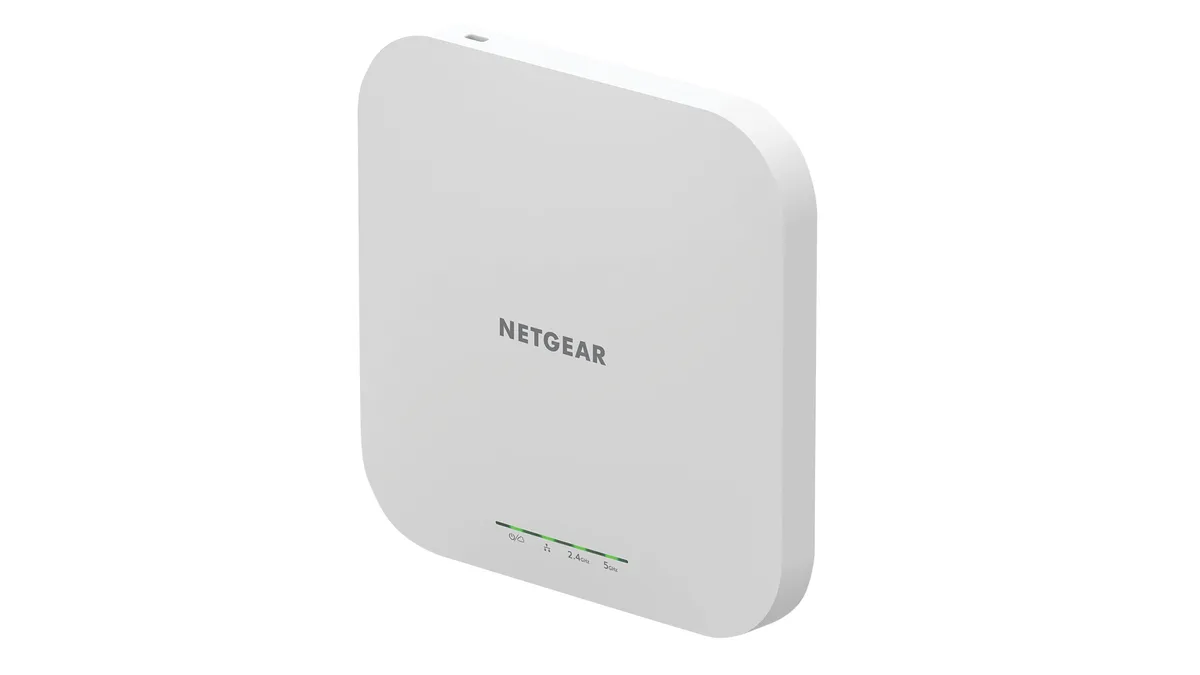
Netgear's business-class Wi-Fi 6 access points (AP) may well be late to the party, but it made a great entrance at just £130 (exc VAT). For that low price, you get support for wireless mesh networks and full cloud management. This is a router that brings Wi-Fi 6 to small businesses at a price they'll love. It's also easy to deploy and delivers great performance, while the Insight portal provides slick all-around management and visibility of your wireless networks.
| WAN connection | Gigabit Ethernet |
| Wi-Fi standard | 802.11ax |
| Stated speed | 1,200Mbits/sec, 600Mbits |
| Ports | Gigabit Ethernet/PoE |
Price when reviewed: £130 exc VAT
Read our full Netgear WAX610 review for more information.
Zyxel Unified Pro

Zyxel has joined the Wi-Fi 6 party with its flagship Unified Pro WAX650S, an AX3550 unit supporting speeds of 2,400Mbits/sec on its 5GHz radio and 1,150Mbits/sec on the 2.4GHz band. Although, at £514 it's more expensive than most of its rivals, it does offer double the throughput and is still a lot cheaper than blue-chip alternatives. For SMBs looking to upgrade their wireless service, the Zyxel Unified Pro is a very tempting package. By no means the cheapest, but its filled with plenty of features, a great choice of management options and impressive performance.
| WAN connection | Gigabit Ethernet |
| Wi-Fi standard | 802.11ax |
| Stated speed | 2,400Mbits/sec, 1,150Mbits/sec |
| Ports | Gigabit Ethernet/PoE |
Price when reviewed: £514 exc VAT
Read our full Zyxel Unified Pro review for more information.
Netgear WAX630
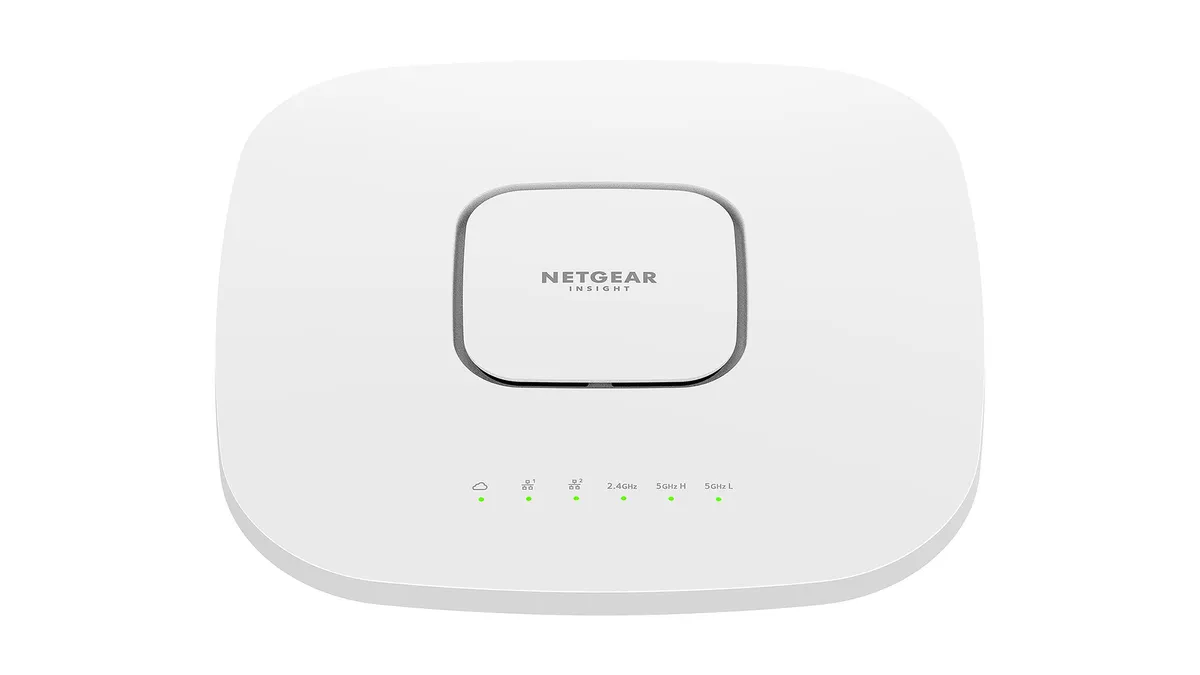
Netgear's WAX630 is designed to handle up to 600 clients and 100 concurrent connections, making it just the thing for a big busy office. It is a great choice of AP for dense Wi-Fi 6 deployments as its triple radios also deliver fantastic performance in a neatly integrated package. What's more, it's easy to install and comes with an impressive range of remote management and monitoring functions - all for just £229.
| WAN connection | Gigabit Ethernet |
| Wi-Fi standard | 802.11ax |
| Stated speed | 1,200Mbits/sec, 2,400Mbits/sec |
| Ports | Gigabit Ethernet/PoE |
Price when reviewed: £229 exc VAT
Read our full Netgear WAX360 review for more information.
DrayTek VigorAP 960C
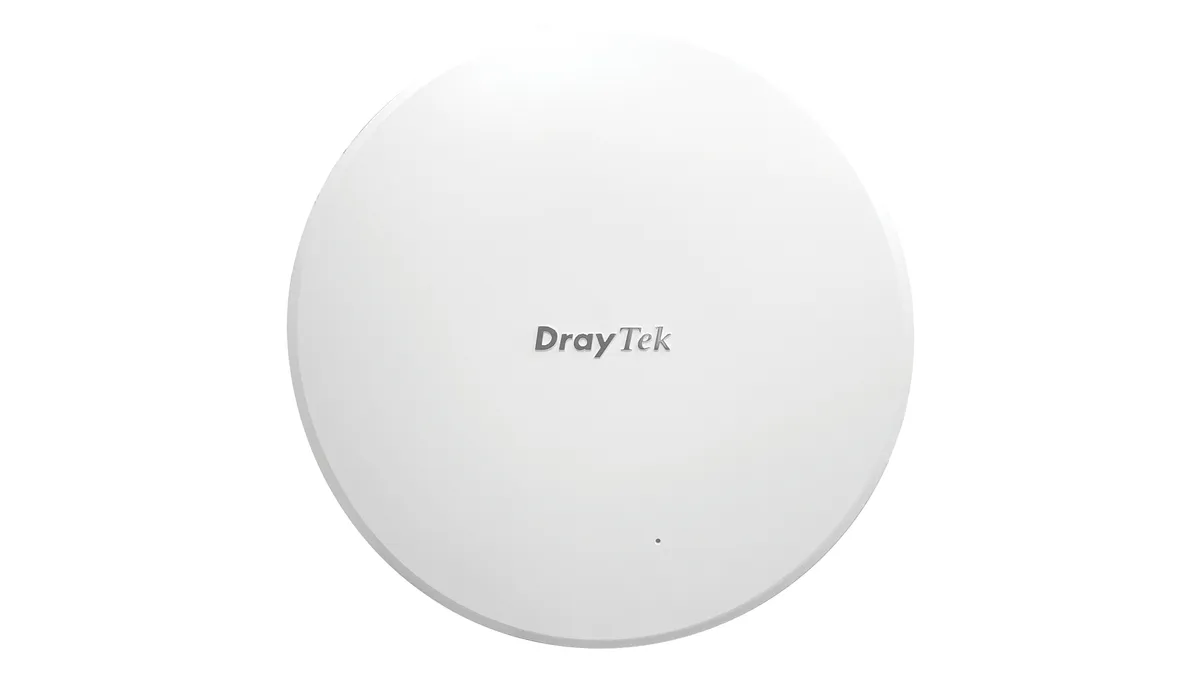
DrayTek has made a name for itself by offering up business-class networking for prices that are affordable for small businesses. And, in that sense, its VigorAP 960C is a typical DrayTek product at just £163. For that relatively low price, you get dual-band Wi-Fi 6 radios, impressive performance and support for three operational modes. Along with its four management methods and supremely versatile, the VigorAP 960C is the perfect next-generation wireless solution for SMBs.
| WAN connection | Gigabit Ethernet |
| Wi-Fi standard | 802.11ax |
| Stated speed | 1,200Mbits/sec in the 5GHz, 574Mbits/sec in the 2.4GHz |
| Ports | Ethernet/PoE |
Price when reviewed: £163 exc VAT
Read our full DrayTek VigorAP 960C review for more information.
Netgear Nighthawk RAX80
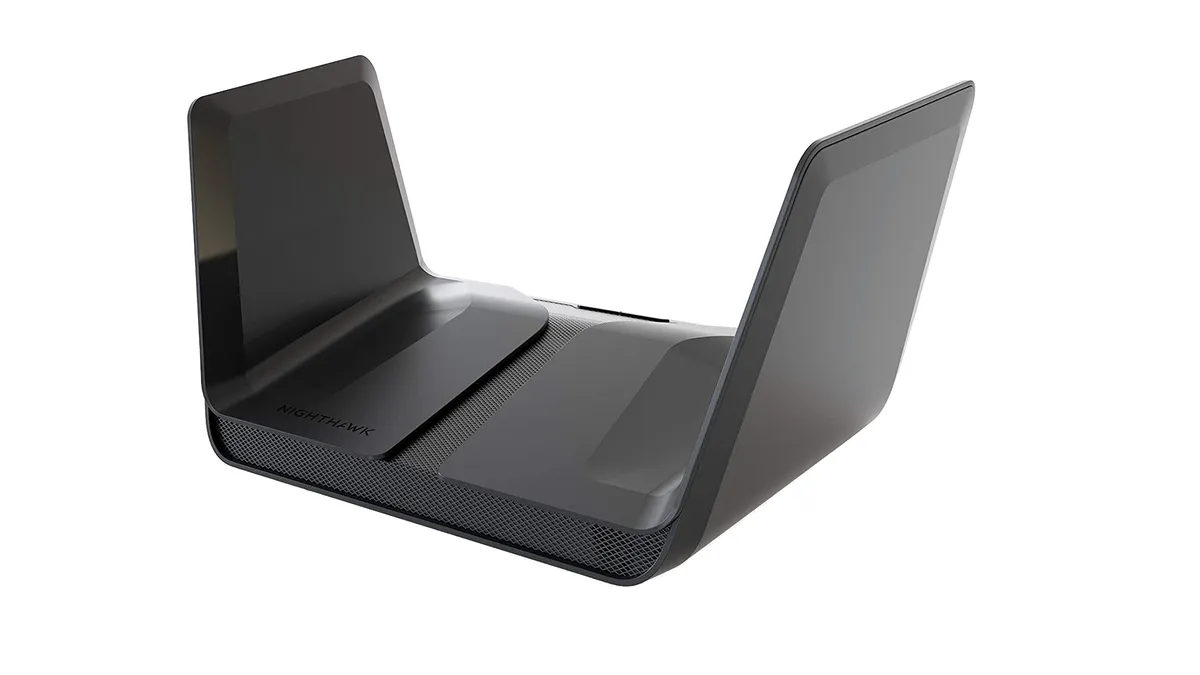
At £280 the Netgear Nighthawk RAX80 might seem quite expensive, but it isn't outlandish for a high-end Wi-Fi 6 solution. Some premium models and mesh systems can set up back up to £400, or more. What's more, for that money you do get something that is that appears to be a cut above the mainstream, with five LAN ports and a pair of 5Gbits/sec USB 3 ports. In our review, the RAX80 showcased performance over 802.11ax, which makes it one of the best around. It outpaced routers costing more than £100 and, combined with its simple setup, makes it something of a winner.
| WAN connection | Gigabit Ethernet |
| Wi-Fi standard | 802.11ax |
| Stated speed | 1,200Mbits/sec at 2.4GHz, 4,800Mbits/sec at 5GHz |
Price when reviewed: £233 exc VAT
Read our full Netgear Nighthawk RAX80 review for more information.
Ubiquiti Networks UniFi nanoHD
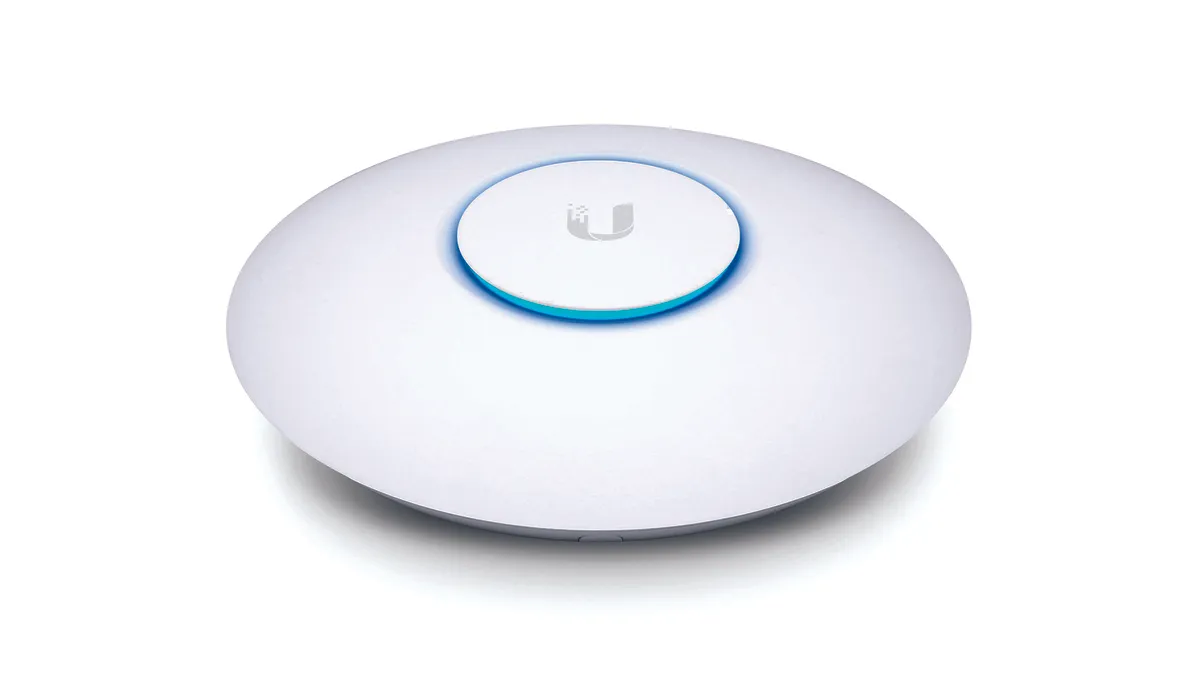
This dinky saucer is one of the most compact and concealable APs we've seen. Happily, that doesn’t stop the UniFi nanoHD from performing very well indeed, nor from reaching out with a long effective range. The trade-off is that the hardware is very simple, notably featuring only a single Ethernet port, and management features are limited too: we’d recommend adding a UniFi Security Gateway (USG) for more in-depth options. That adds to the price, but it's balanced out by free cloud and on-site management.
| WAN connection | Gigabit Ethernet |
| Wi-Fi standard | 802.11ac |
| Stated speed | 1,733Mbits/sec (5GHz), 300Mbits/sec (2.4GHz) |
| Ports | 1x Gigabit Ethernet |
Price when reviewed: £133 exc VAT
Read our full Ubiquiti Networks UniFi nanoHD review for more information.
Ubiquiti Networks UniFi Dream Machine
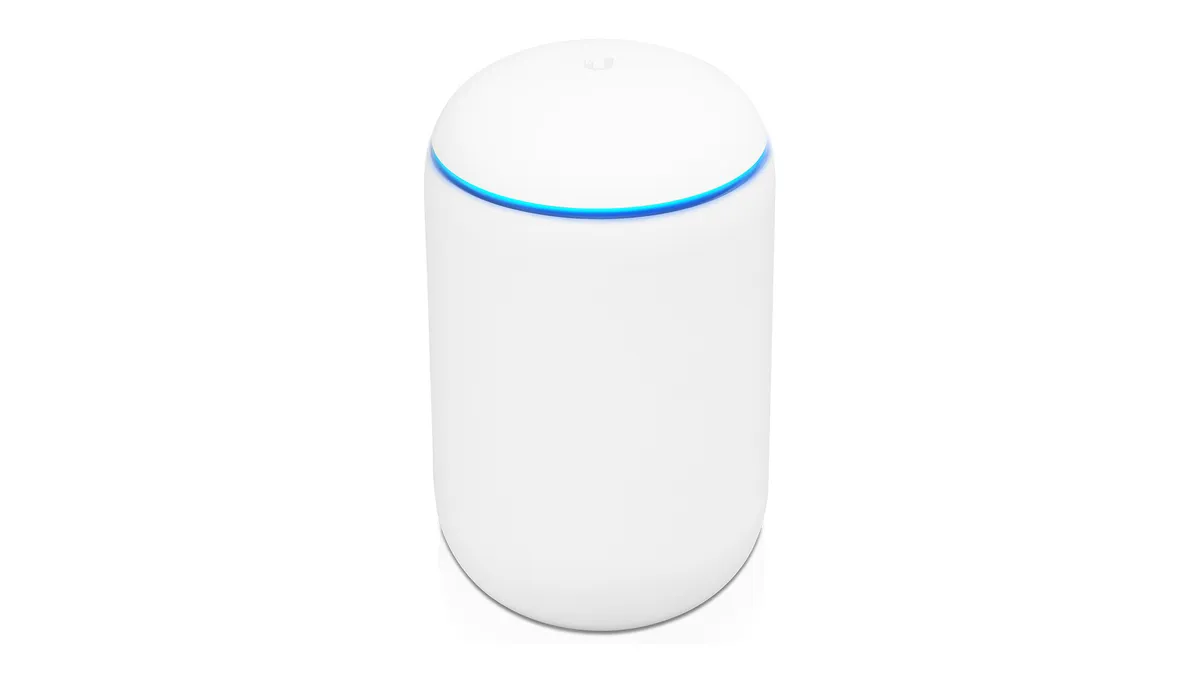
It may not be much to look at, but believe it or not, the UniFi Dream Machine is a complete professional networking solution. It has a built-in firewall and plenty of security features, plus Wave 2 802.11ac wireless, which can work with other UniFi APs to form a Wi-Fi mesh. While administrators may choose to use the powerful web portal, the Dream Machine can also be fully managed from a smartphone or tablet, using free apps for Android and iOS - so you can stay on top of your network even when you're out and about. It's perfect for businesses setting up a new network and looking for an all-in-one gateway and management solution.
| WAN connection | Gigabit Ethernet |
| Wi-Fi standard | 802.11ac |
| Stated speed | 1,733Mbits/sec (5GHz), 300Mbits/sec (2.4GHz) |
| Ports | 4x Gigabit Ethernet, 1x LAN WAN |
Price when reviewed: £248 exc VAT
Read our full Ubiquiti Networks UniFi Dream Machine review for more information.
Honor Router 3

This is a cute little box that delivers decent wireless speeds, broad coverage and a modest speed boost for newer hardware. Moreover, what is important to underline is its extremely impressive price of £67. To put this in perspective, the next cheapest router we've seen on this list is still over £100. While this price is reflected in its features, it still could be a good option for those on a budget.
| WAN connection | Gigabit Ethernet |
| Wi-Fi standard | 802.11ac |
| Stated speed | 2,402bits/sec (5GHz), 574Mbits/sec (2.4GHz) |
| Ports | 4x Gigabit Ethernet, 1x WAN |
Price when reviewed: £67 exc VAT
Read our full Honor Router 3 review for more information.
Aruba Instant On AP22
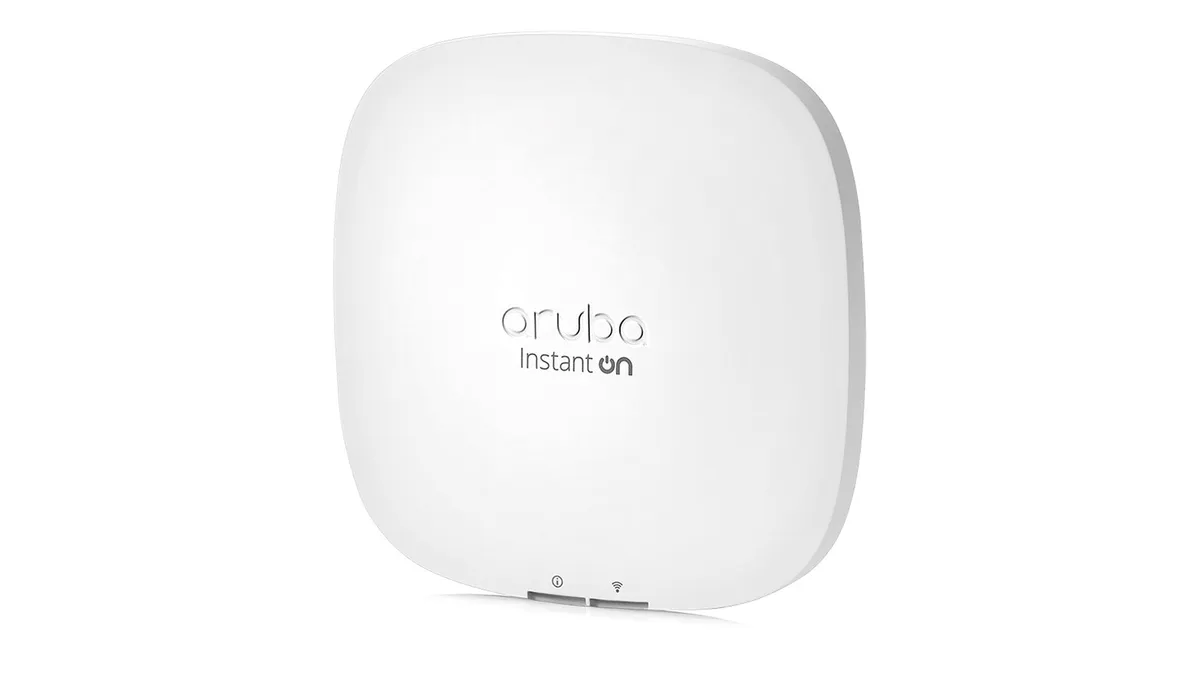
Aruba’s Instant On AP22 is a great introduction to the world of Wi-Fi 6, and it's easy to deploy and manage too. For its price point, it delivers good wireless performance that would have seemed unthinkable only a few months ago. It is being sold at a price that is sensible for small businesses and comes with a full complement of management and connection options.
| WAN connection | Gigabit Ethernet |
| Wi-Fi standard | 802.11ac |
| Stated speed | 1,200bits/sec (5GHz), 574Mbits/sec (2.4GHz) |
| Ports | Gigabit PoE+ |
Price when reviewed: £144 exc VAT
Read our full Aruba Instant On AP22 review for more information.
Netgear Orbi RBK50
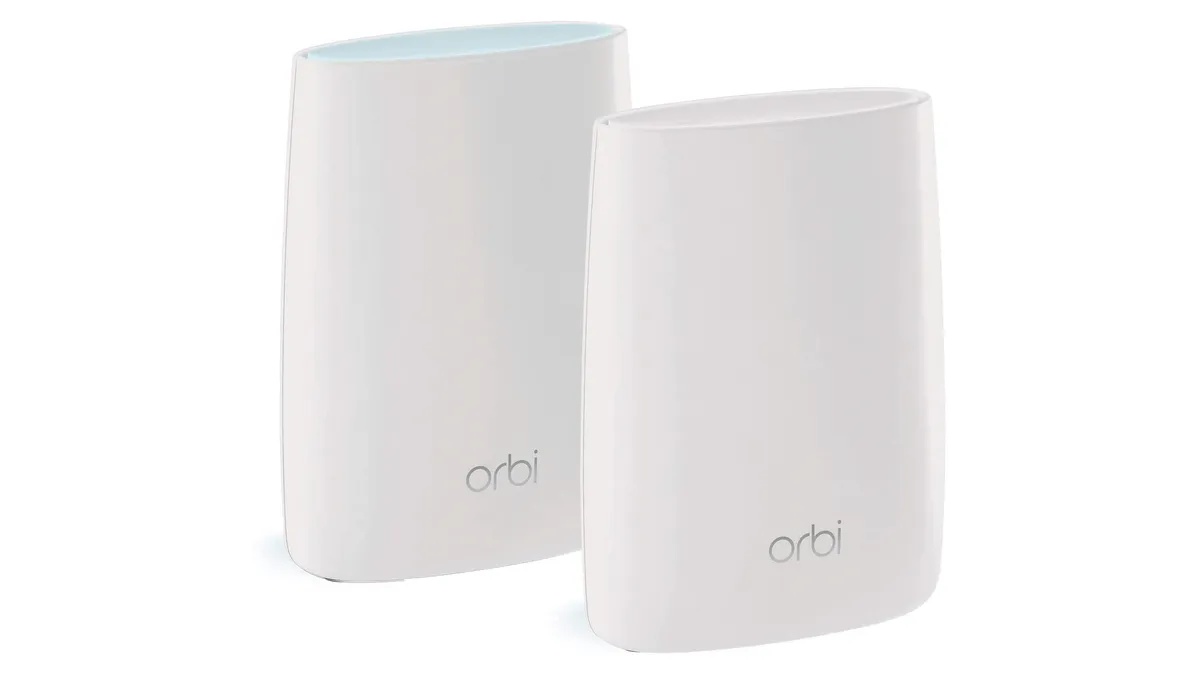
If you're looking for sheer speed and versatility then the Orbi really stands out from the crowd. It has a user-friendly interface and extra security and parental controls give it a good overall appeal. In our view, it's one of the best of the bunch as long as you don't need a next-generation Wi-Fi 6. It has a blazing performance and four Ethernet ports per node although it may be a little too expensive for some users.
| WAN connection | Gigabit Ethernet |
| Wi-Fi standard | 802.11ac |
| Stated speed | 866bits/sec (5GHz), 400Mbits/sec (2.4GHz) |
| Ports | 4x Ethernet, 1x USB 2 |
Price when reviewed: £208 exc VAT
Read our full Netgear Orbi RBK50 review for more information.